
7 Best Affiliate Management Solutions in 2026

Key takeaways
- Refindie – Best for SaaS that want full control and no heavy monthly fees.
- Rewardful – Best for Stripe-based SaaS.
- LeadDyno – Best for businesses that need a “done-for-you”–style stack with lots of integrations.
- Tapfiliate – Best for e‑commerce brands and platforms that want multi-channel tracking.
- AffiliateWP – Best for WordPress sites that want a tightly integrated affiliate layer.
- PartnerStack – Best for companies building complex partner programs (resellers, agencies, ecosystems).
- Choosing the right tool matters more than the feature checklist—pricing model, control, and time-to-launch should drive your decision.
Struggling to choose an affiliate platform without locking yourself into yet another expensive subscription?
This guide walks through seven of the best affiliate management tools in 2026, with a clear angle: when does it make sense to pick a traditional SaaS, and when does it make more sense to own your affiliate setup with a one-time cost like Refindie?
Overview of the best affiliate management solutions in 2026
Affiliate platforms have evolved a lot over the last few years. Most of them now offer:
- Link or coupon-based tracking
- Dashboards for affiliates
- Automatic commission calculations
- Integrations with payment providers, checkout tools, and CRMs
But the real differences show up in:
- Pricing model – recurring SaaS vs. one-time or low fixed fee
- How much control you have over data, branding, and payout logic
- Time-to-launch – can you go live this week, or will it take a full implementation project?
In this comparison, we’ll:
- Highlight who each tool is best for
- Call out key strengths and trade-offs
- Explain where Refindie fits if you want to avoid long-term monthly fees while keeping a modern affiliate experience
1. Refindie (Best for indie founders and small SaaS that hate heavy monthly fees)
Refindie is built for founders who want to launch a serious affiliate program without adding another $50–$200/month SaaS to the stack. Instead of charging you forever, Refindie focuses on one low upfront cost, so you can validate that an affiliate program works for your product before committing to bigger budgets.
It’s especially well suited for:
- Indie SaaS and small teams
- Solo founders launching their first affiliate program
- Bootstrapped projects that must stay profitable from day one
Refindie gives you modern tracking, dashboards, and payouts without the “enterprise” complexity.
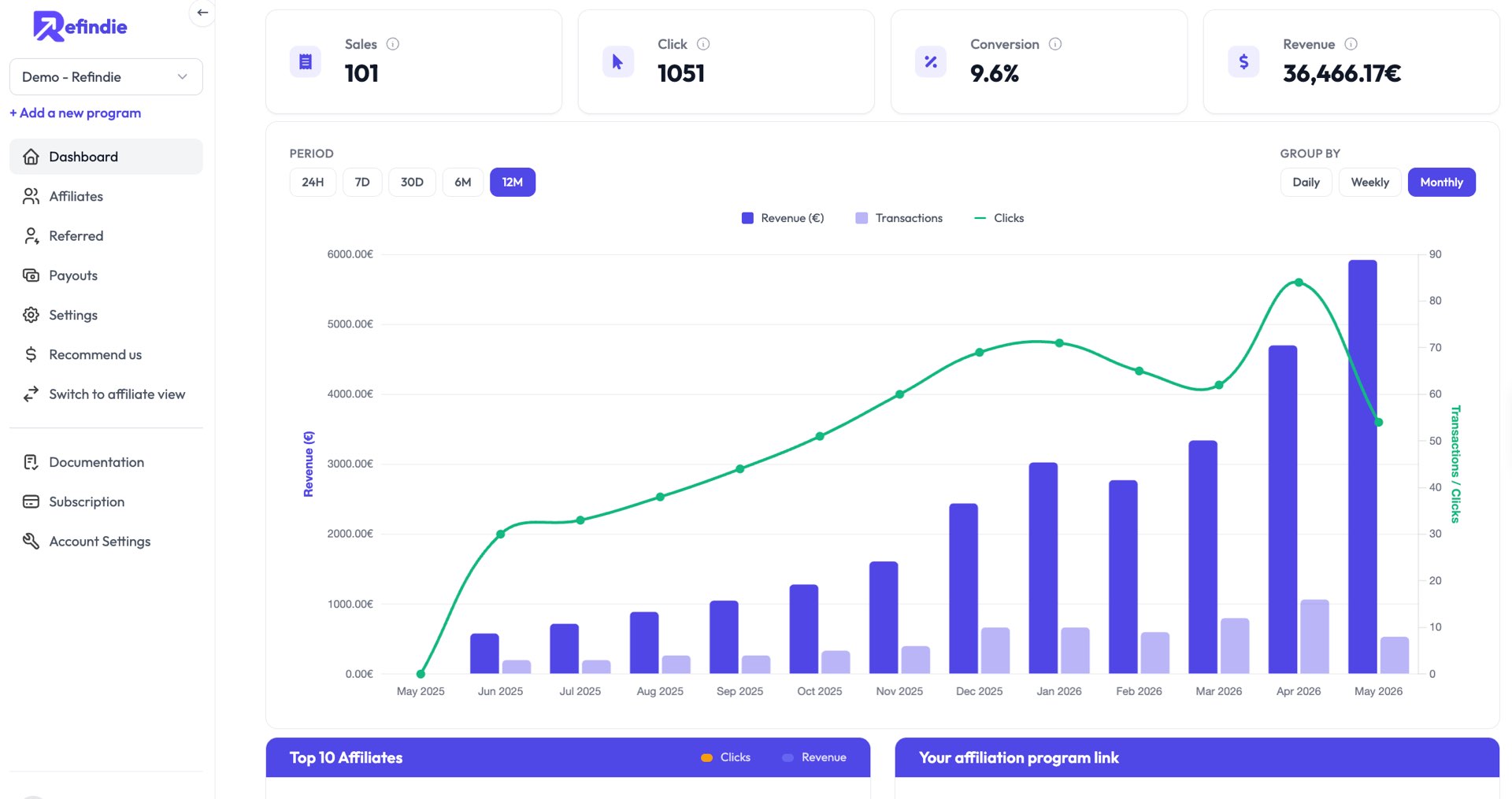
What you get with Refindie
-
No recurring SaaS bill while you validate your program
Refindie lets you kick off your affiliate strategy without eating your MRR. You can prove that the channel works, get to your first $1,000+ in referred revenue, then decide how far you want to scale. -
Clean, focused affiliate dashboards
Affiliates can log in, grab their links, and see clicks, signups, and commissions. You keep the friction low so partners focus on promoting—not trying to learn a new tool. -
Full control over your incentives
You decide the commission rules: flat or recurring, one-time bonuses, or tiered rewards for top performers. Refindie handles the tracking so you can focus on crafting an offer that affiliates actually want to talk about. -
Simple setup for SaaS and digital products
Refindie is designed for typical founder workflows (Stripe, subscriptions, one‑time payments, digital products), without forcing you into enterprise-style configuration.
When Refindie is the right choice
Choose Refindie if:
- You want ownership and predictability instead of another open-ended SaaS subscription
- You care more about results and control than having 200 rarely used features
- You want to launch this week, not in three months after a long implementation
If your priority is to test the affiliate channel, keep costs low, and still look professional to your partners, Refindie should be your starting point.
👉 Ready to launch without monthly fees?
Set up your tracking with Refindie on a one-time plan and keep your margins healthy while you grow.
2. Rewardful (Best for Stripe-first SaaS)
Rewardful is a popular affiliate platform built primarily for SaaS businesses using Stripe. Its main strength is how tightly it connects your affiliate program with subscriptions, plans, trials, and upgrades in Stripe.
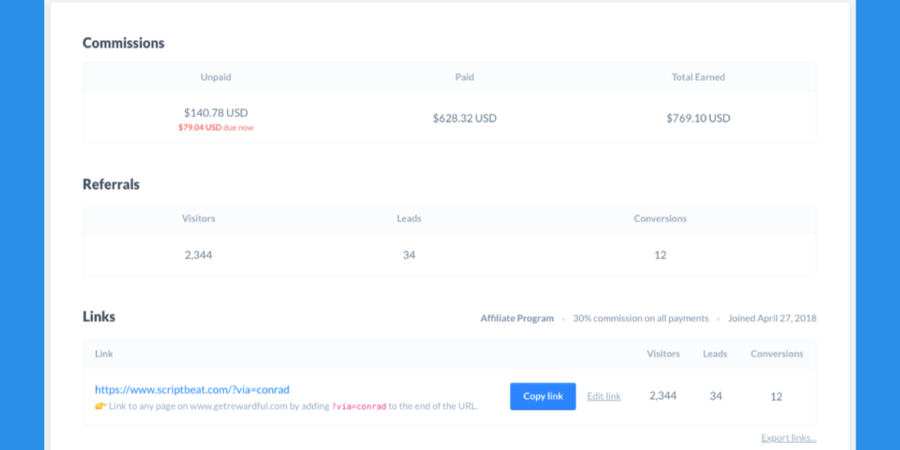
Strengths of Rewardful
- Deep Stripe integration – Track recurring subscriptions, upgrades, and refunds directly against affiliate referrals.
- Automatic commission calculations – Rewardful can automatically handle lifetime value, MRR, and recurring percentages without manual spreadsheets.
- Solid affiliate experience – Clean dashboards, referral links, and coupon support for partners.
Things to keep in mind
- Recurring monthly cost – Rewardful is great once your MRR justifies the spend, but it can feel heavy if you are still pre‑PMF or validating your first affiliates.
- Less flexible outside Stripe – It’s ideal when your whole billing stack runs on Stripe; less so if you use multiple payment layers or complex checkouts.
Rewardful is a strong choice if you’re already committed to Stripe and want a “classic SaaS” affiliate platform with good reporting and automation.
3. LeadDyno (Best for done-for-you style affiliate stacks)
LeadDyno is positioned for businesses that want a full-featured affiliate and referral hub with lots of integrations—e‑commerce, SaaS, and agencies.
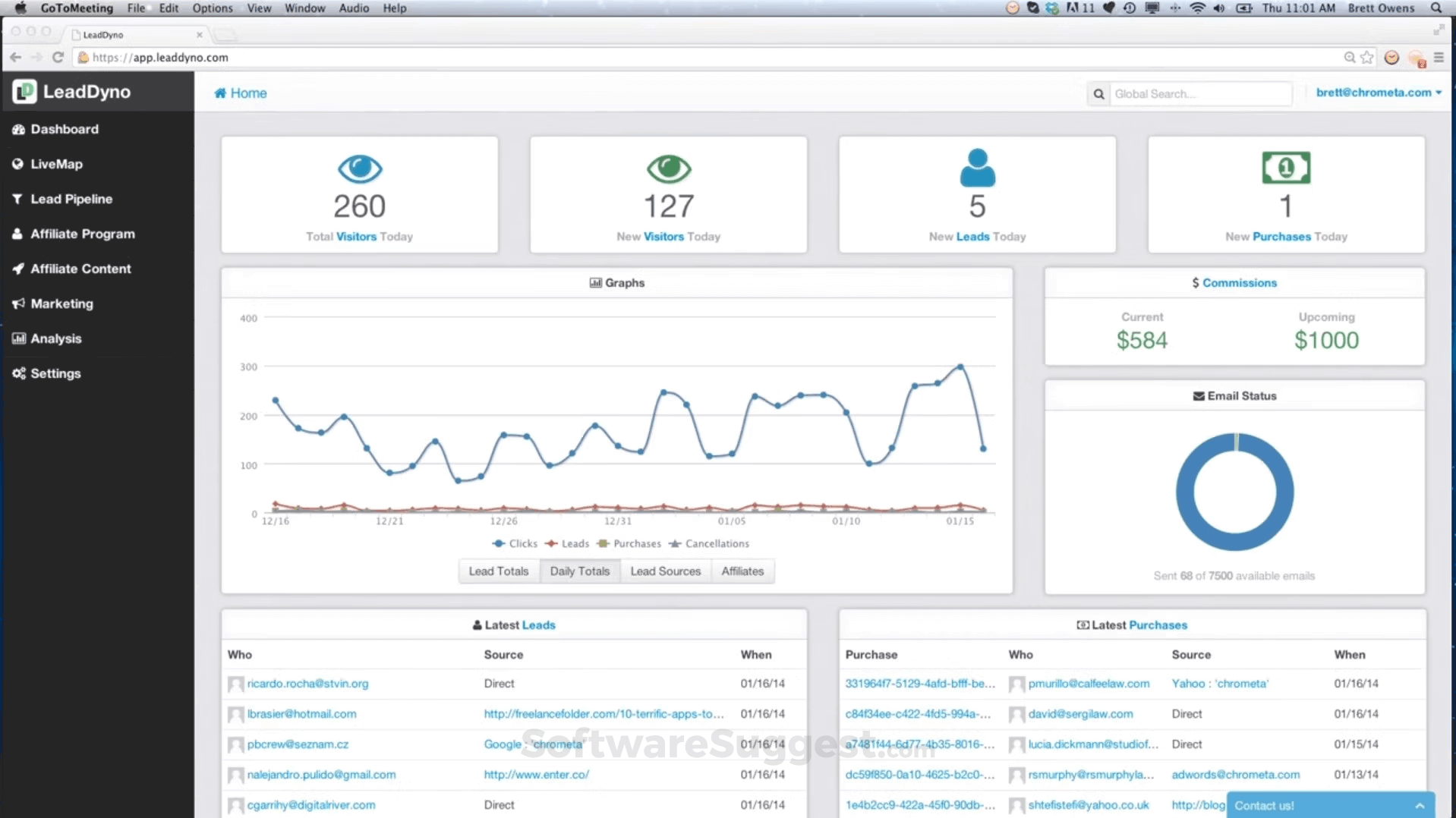
Strengths of LeadDyno
- Wide integration coverage – Connects with many shopping carts, CRMs, and email tools.
- Multi-channel tracking – Handles links, coupon codes, and campaign tracking.
- Mature reporting – Historic data, cohort views, and performance insights for affiliates and campaigns.
Trade-offs with LeadDyno
- Heavier setup – The flexibility comes with complexity; you’ll likely spend more time configuring and maintaining things.
- Subscription pricing – Like most legacy affiliate tools, you’ll pay a recurring fee that increases as your needs grow.
LeadDyno makes sense if you’re running a multi-channel, multi-tool stack and need your affiliate tracking to live in the middle of everything—even if that means a bit more setup time and a monthly bill.
4. Tapfiliate (Best for e‑commerce and multi-channel campaigns)
Tapfiliate is often chosen by e‑commerce brands and online platforms that run campaigns across multiple channels (content affiliates, influencers, coupon sites, and more).
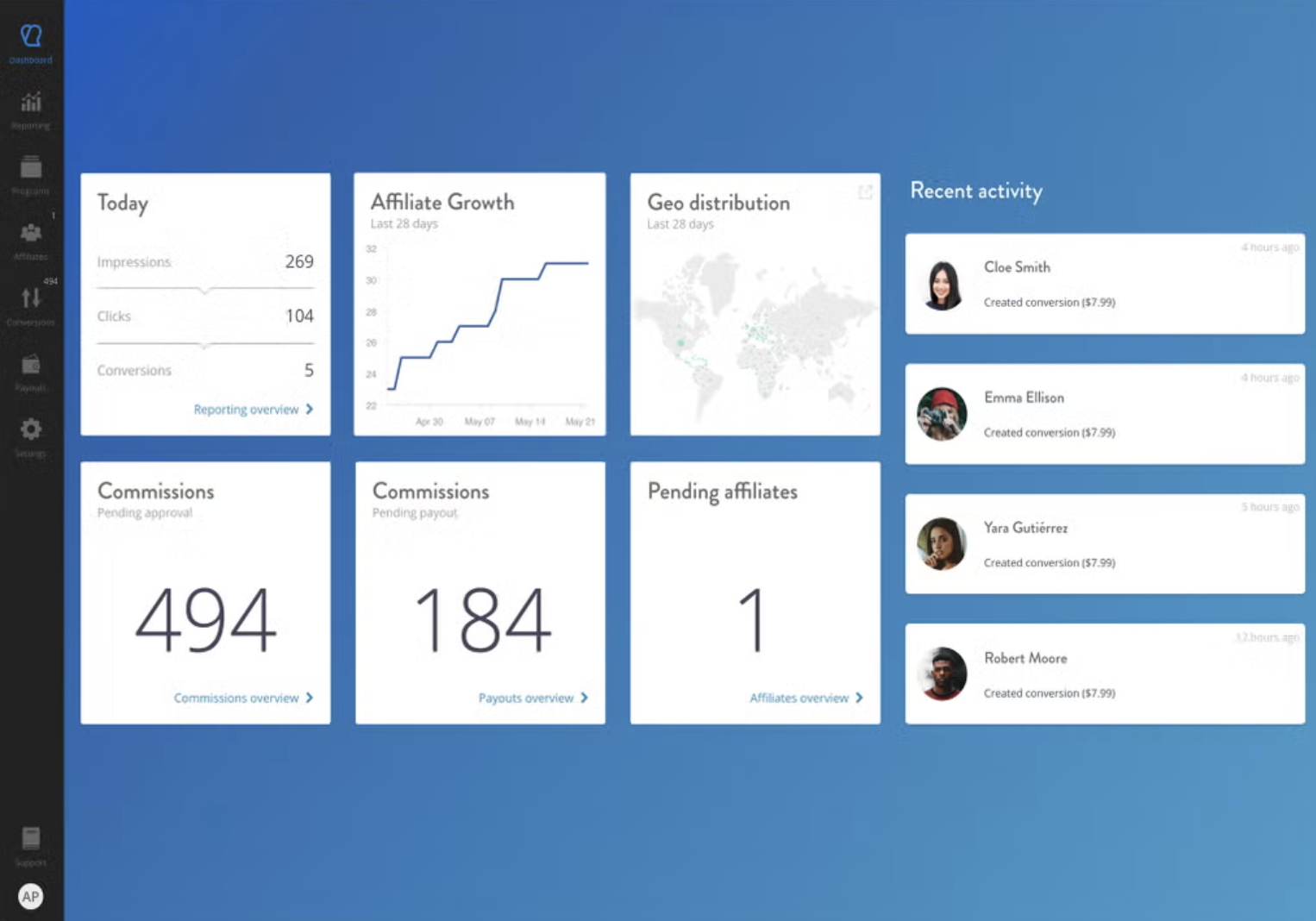
Strengths of Tapfiliate
- Good support for e‑commerce platforms – Integrations with tools like Shopify, WooCommerce, and others.
- Customizable commission rules – Percentage, fixed, tiered, and campaign-specific logic.
- Branded affiliate portal – You can style the affiliate area to better match your brand.
Trade-offs with Tapfiliate
- More “ops” to manage – Complex commission logic and multiple campaigns are powerful, but they demand more ongoing maintenance.
- Recurring pricing – Again, a subscription tool that makes the most sense once your affiliate channel is already performing.
Tapfiliate is a good fit when you already run a serious e‑commerce operation and need campaign-level control across many partners and channels.
5. AffiliateWP (Best for WordPress sites)
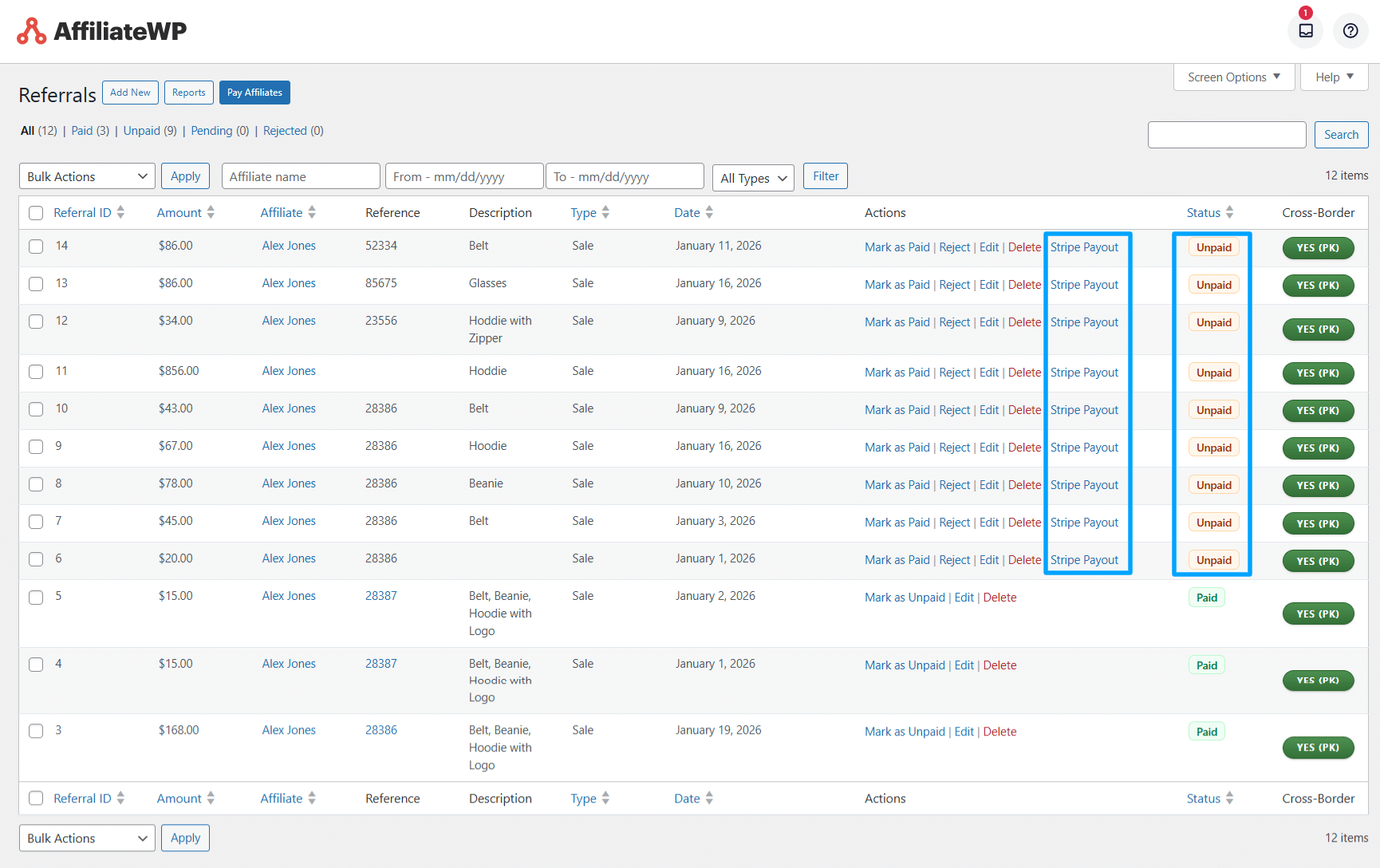
AffiliateWP is a self-hosted WordPress plugin that turns your existing site into an affiliate platform. If your whole business runs on WordPress, it can be a very natural choice.
Strengths of AffiliateWP
- Lives inside WordPress – No separate hosted dashboard; everything is managed within your admin panel.
- Tight integration with popular plugins – Works with many membership, LMS, and e‑commerce extensions.
- You own the infrastructure – Your affiliate data and logic live on your own server.
Trade-offs with AffiliateWP
- You’re responsible for maintenance – Hosting, performance, backups, and security are on you.
- Less ideal for non‑WordPress stacks – If your product lives elsewhere (e.g., separate app plus a marketing site), you may need extra workarounds.
AffiliateWP is a strong pick if you’re all‑in on WordPress and comfortable managing plugins and hosting—especially when you want to keep everything under one roof.
6. PartnerStack (Best for complex partner ecosystems)
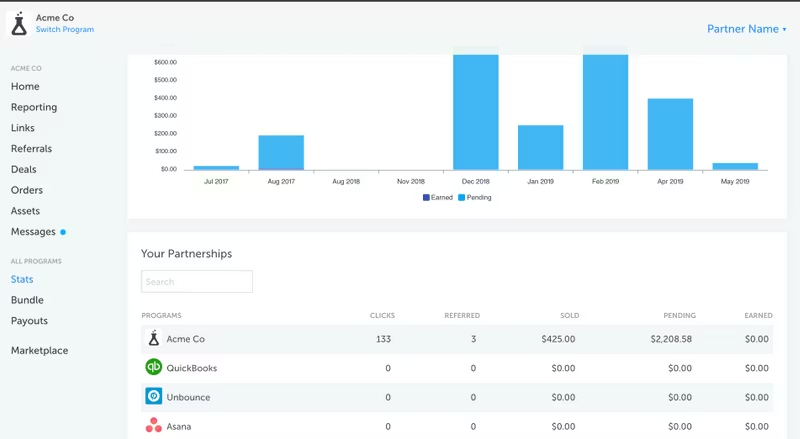
PartnerStack is built for companies that are evolving beyond simple affiliates into full partner ecosystems: agencies, resellers, technology partners, and marketplaces.
Strengths of PartnerStack
- Multi-partner workflows – Handle affiliates, resellers, and referral partners in one place.
- Partner marketplace – Access to a broader ecosystem where partners can discover and promote your product.
- Enterprise-grade features – Approvals, deal registration, partner tiers, and more.
Trade-offs with PartnerStack
- Overkill for early-stage teams – The power is real, but so is the operational overhead. You’ll need someone to “own” the partner program.
- Higher price point – Designed for companies that can justify a serious partner budget, not for testing the channel for the first time.
PartnerStack is ideal if you are already operating at scale and want a structured partner program, not just a simple referral layer.
7. How to choose the right affiliate solution for your business
Instead of starting with the tool, start with your constraints:
- Stage – Are you validating the channel or already scaling it?
- Cash flow – Can you comfortably afford a recurring $100–$300/month tool from day one?
- Stack – Are you all‑in on Stripe, WordPress, or e‑commerce platforms?
- Ownership – Do you prefer hosting things yourself or offloading everything to a hosted SaaS?
From there:
- If you’re bootstrapped, indie, or running a small SaaS, Refindie lets you launch a real affiliate program without locking into heavy monthly fees.
- If you’re tied deeply into Stripe, Rewardful is a natural fit.
- If you’re e‑commerce-first, Tapfiliate (or LeadDyno) can make sense.
- If you’re WordPress‑centric, AffiliateWP is very hard to beat.
- If you’re scaling partner ecosystems, PartnerStack is built for that level.
Conclusion
Affiliate marketing is one of the few channels where you only pay when you win—which makes your choice of platform even more important. The wrong tool can quietly eat your margins with subscriptions and complexity; the right one will let you launch fast, keep costs predictable, and focus on building relationships with partners.
If you want to test and grow an affiliate program without committing to yet another monthly SaaS, Refindie is designed specifically for that: one low upfront cost, modern dashboards, and full control over your incentives.
Ready to start?
Launch your affiliate tracking with Refindie, recruit your first 5–10 partners this month, and scale on your own terms.
Frequently asked questions
What makes a good affiliate management solution in 2026?
A good solution in 2026 should combine accurate tracking, clear affiliate dashboards, and flexible commission rules—without forcing you into a pricing model that doesn’t match your stage. For many indie and small SaaS teams, that means avoiding heavy recurring SaaS fees until the affiliate channel is clearly profitable.
Do I really need a dedicated affiliate platform, or can I DIY it?
You can hack something together with spreadsheets and coupon codes, but it breaks quickly once you have more than a handful of affiliates. A dedicated platform like Refindie or the other tools on this list gives you trust, transparency, and automation that are very hard to replicate manually.
How much should I expect to pay for affiliate software?
Most traditional tools charge $50–$300/month depending on features, volume, and support. If you’re early‑stage or bootstrapped, a one-time model like Refindie can be far more attractive because you keep your fixed costs low while you validate the channel.
Where should I display affiliate-driven traffic and conversions?
Your platform should show you at least: clicks, signups, conversions, and commissions owed per affiliate. From there, plug those numbers into your analytics stack so you can compare affiliate performance with paid ads, content, and other channels. The goal is to see clearly where each referred customer comes from and how much revenue they generate over time.
How do I get my first affiliates to actually promote me?
Regardless of which tool you pick, the work is the same:
- Make the offer compelling (commissions that feel worth the effort).
- Make the material easy to use (swipe copy, visuals, examples).
- Make the experience smooth (clear dashboard, on‑time payouts, honest reporting).
Tools like Refindie help you handle the boring parts (tracking, dashboards, commissions) so you can focus on finding and supporting the right partners.